You want a night under the stars, but the choice paralyzes you: do you rough it in a tent you pitch yourself, or book a furnished safari-style setup with a real bed waiting inside? If you’ve scrolled through photos of both and still can’t decide, you’re not alone. The glamping vs camping debate comes down to more than price, and the differences run deeper than most first-timers expect.
This guide breaks down exactly what each option involves, from what arrives pre-set at a glamping site to the gear and skills traditional camping demands. We’ll compare nightly costs and the hidden extras that add up, explain when and how far ahead you should book, and help you match the style to your travel personality. By the end, you’ll know which one fits your budget, your comfort level and the kind of outdoor trip you actually want.
Glamping vs Camping: The Core Differences at a Glance
Glamping, short for glamorous camping, means you arrive at accommodation that someone else has already set up. Think canvas tents on wooden platforms, geodesic domes or small cabins, all fitted with real beds, proper linens and often electricity. You show up with a duffel bag, not a roof box full of equipment.
Traditional camping is the opposite arrangement. You bring your own tent, sleeping bag, sleeping pad and cooking gear, then pitch, maintain and pack down everything yourself. The campsite gives you a patch of ground, maybe a fire ring and a picnic table, and the rest is on you.
The real divide: who does the work
Strip away the marketing language and the genuine difference is responsibility. With glamping, the operator handles setup, comfort and weatherproofing: they’ve chosen a tent that sheds rain, added heating or cooling, and stocked the beds. Your only job is to enjoy the location.
With camping, all three of those jobs fall to you. You decide whether your tent stays dry in a storm, whether your sleeping setup keeps you warm at night and whether your food survives the trip. That’s either the appeal or the dealbreaker, depending on who you are, and it shapes everything else in this guide, from costs to booking timelines.
What a Glamping Stay Actually Includes
A proper glamping unit is much closer to a small hotel room than to a tent, even when it looks like one from the outside. Ensuite or nearby private bathrooms, heating or air conditioning, and hotel-style bedding with real mattresses and layered linens are standard at established properties. You typically get lighting, outlets and a proper door or zippered entry with weatherproofing that actually works in a downpour.
Beyond the basics, many operators add features that push the stay firmly into the comfort zone. It’s worth checking each property’s unit description carefully, because what counts as “glamping” varies widely, and the extras below are where the better properties separate themselves:
- Private decks or terraces: a raised outdoor space with seating, often angled toward the view, so you get an outdoor living room without setting up anything yourself.
- Wood stoves or fireplaces: indoor heating you can stoke yourself, which keeps canvas tents and domes usable on chilly shoulder-season nights.
- Kitchenettes: a counter, sink, small fridge and basic cookware, letting you prepare simple meals instead of dining out for every one.
- Outdoor baths or hot tubs: soaking tubs or wood-fired hot tubs on the deck, a signature luxury touch at many safari-style and dome properties.
At the upscale end, service enters the picture too. Housekeeping during multi-night stays is common, and many properties offer on-site dining or deliver breakfast baskets to your door each morning. Ask about these when booking, since they’re often included in the rate rather than listed as add-ons.
What Traditional Camping Demands From You
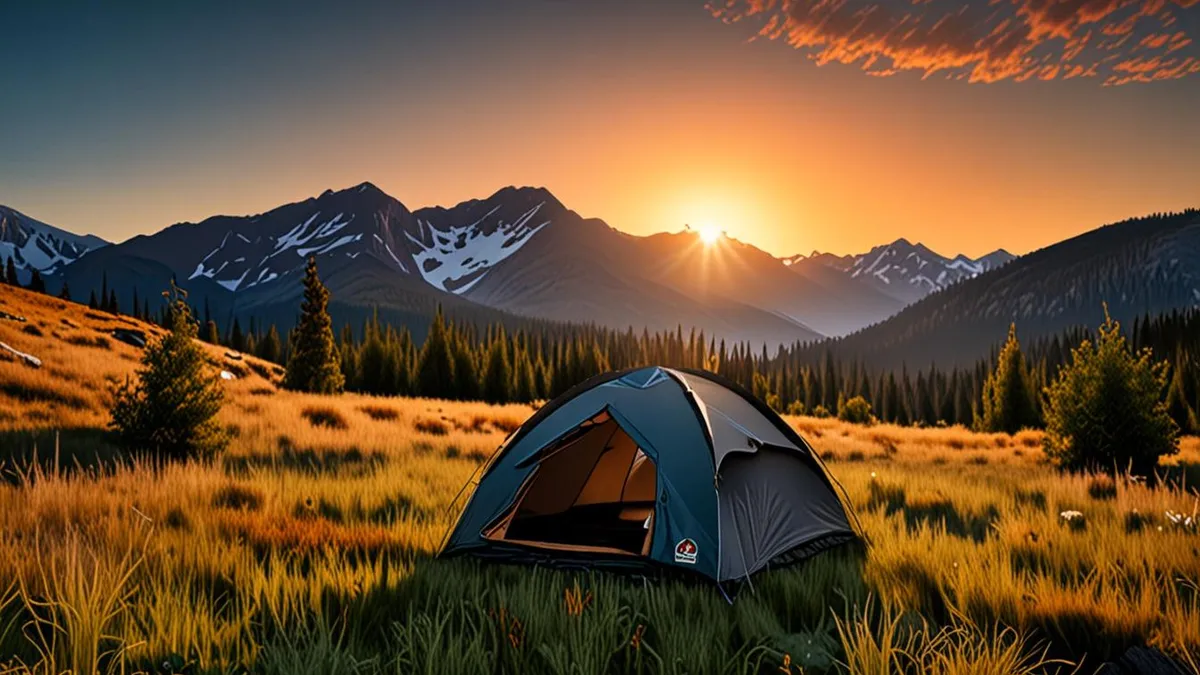
Traditional camping puts every task on your shoulders. You carry all your gear to the site, pitch the tent, figure out your sleeping arrangement, cook your own meals on a camp stove or fire, and then reverse the whole process when you leave. There’s no housekeeping, no breakfast basket and no front desk if something breaks.
The upfront cost of getting started
Before you even book a campsite, you need equipment. A usable starter kit runs roughly $300-$600 per person, covering a tent, sleeping bag, sleeping pad and basic cooking setup. That’s before extras like headlamps, coolers and camp chairs, which most people add within the first few trips. The upside is that gear lasts for years, so the cost spreads out over many nights.
Comfort is a skill, not a purchase
Buying good gear is only half the equation; how comfortable you are depends on what you know. Layering clothes properly keeps you warm without sweating, because cotton that gets damp stays damp and cold. Rain management means knowing how to pitch a taut rainfly, keep gear dry and pick a site that doesn’t pool water. Food storage matters too, both for keeping meals fresh and for keeping wildlife away from your site in bear country or anywhere animals have learned to raid coolers.
None of these skills are hard to learn, but they take a trip or two to click. First-time campers should expect a learning curve and plan a shakedown trip close to home before committing to anything remote.
Cost Comparison: Nightly Rates and Hidden Extras
Glamping typically runs $150-$500 per night, which puts it closer to a mid-range hotel than to a campsite. That rate buys you a pre-set tent or cabin, real bedding and someone else handling the setup. Traditional campsites, by contrast, usually cost $15-$60 per night, but the sticker price only tells part of the story, because the true cost of camping is spread across gear, trips and time.
The hidden math favors camping if you camp often. Once you own your equipment, that upfront investment pays for itself over multiple trips, and every additional night costs little more than the site fee. Glamping has almost no gear cost, but you pay the full rate every single night, so the gap widens with each stay. Camp once or twice a year and the convenience may justify it; camp a dozen nights and the numbers tilt the other way.
- Timing matters for glamping rates: prices often spike on summer weekends during peak season, while midweek nights at the same property can cost noticeably less, so shifting your stay by a day or two can save real money.
- Campsites charge per site, not per person: a family campsite often allows up to 6 people, which means splitting a $15-$60 site among several adults can bring the per-person cost down to just a few dollars.
- Glamping units sleep fewer guests: most units are built for 2-4 people, so a larger group usually needs to book multiple units, multiplying the nightly total quickly.
- Gear wears out: tents, sleeping pads and stoves need replacing every few years, so frequent campers should budget for occasional replacements on top of site fees.
When and How Far Ahead to Book
Booking windows differ sharply between the two styles, and showing up without a reservation rarely works in either case during busy periods. Glamping properties have limited inventory, since a single operator may only run a handful of tents, domes or cabins on site. Top campsites in famous parks can be gone within minutes of release, especially for weekend dates in summer. Treat booking like buying concert tickets: know the date, be ready, and act fast.
- Book glamping units 3-6 months ahead for summer weekends. Peak season in most temperate regions runs May to October, and weekend availability in popular areas disappears early, so lock in your dates well before you start packing. If you have your heart set on a specific unit, such as an overwater tent or a dome with a view, book at the earliest end of that window.
- Watch the release date for popular national park campsites. Inventory is often released about 5-6 months ahead, and the most sought-after loops sell out fast, sometimes the same day, so mark the date and book the moment reservations open. Have a second-choice campground picked out in case your first pick fills instantly.
- Target the shoulder months for better value. May, September and early October typically offer lower rates and milder weather in both styles, with fewer crowds at the same time. You also get more daylight-friendly temperatures for hiking, and less competition for the best sites.
- Check cancellation policies before committing. Glamping deposits can be substantial at upscale properties, and campsite fees are usually modest but non-refundable in some systems, so read the terms before you confirm. Weather happens, and knowing your options makes changing plans far less painful.
Whichever style you choose, set a calendar reminder well before the booking window opens rather than browsing casually a few weeks out. Flexibility on dates is your best backup: if a Saturday is gone, a midweek night or a shoulder-month date often still has space at a better rate. It also pays to check whether the property or campground keeps a waitlist, since cancellations do happen and a spot can open up days before arrival. A quick phone call or email a week out occasionally turns a full calendar into a confirmed stay.
Which One Suits Your Travel Style
The honest question to ask yourself is how much you want to work for your time outdoors. Glamping gives you nature with hotel comfort: you arrive to a made bed, a lit tent and often a deck or wood stove already waiting. It suits short stays of a night or two, first outdoor experiences and anyone who wants the scenery without the learning curve. Camping asks more of you, but rewards you with a different kind of satisfaction.
When glamping is the smarter pick
Families with young kids often start with glamping, and it is easy to see why. A real bed, heating and a private bathroom remove the friction points that can turn a first trip into a one-time trip, and a unit that sleeps 2-4 guests fits most young families well. If a rainstorm rolls in, you retreat indoors instead of wrestling a wet tarp in the dark. Glamping also works well for mixed groups where some travelers want the outdoors and others simply do not want to sleep on the ground.
When camping wins
Choose camping if you enjoy self-sufficiency and want your skills to shape the experience. Pitching your own shelter, cooking on a stove or fire and managing rain and food storage are exactly the appeal for many travelers, not obstacles to it. Camping also opens up longer and more remote trips where glamping structures simply do not exist, which keeps multi-day journeys affordable. Experienced hikers and backpackers almost always get more from camping, since carrying your own gear is the whole point. Many people do both: a glamping stay to test the waters, then a proper campsite once the routine clicks.
The Bottom Line
Both options put you outdoors for the night; the difference is who does the work. Glamping trades $150-$500 per night for a real bed, heating and zero gear to buy or carry. Camping trades your effort for $15-$60 nights, plus a starter kit that runs roughly $300-$600 per person up front.
Timing matters in both directions. Summer weekend glamping stays disappear early, so it pays to secure your spot around 3-6 months before your trip. Popular national park campsites follow a similar pattern, often selling out about 5-6 months in advance. In the end, the right choice comes down to how much comfort and self-reliance you want outdoors. If this helped you decide, leave a comment or share the article with a friend who’s torn between the two.